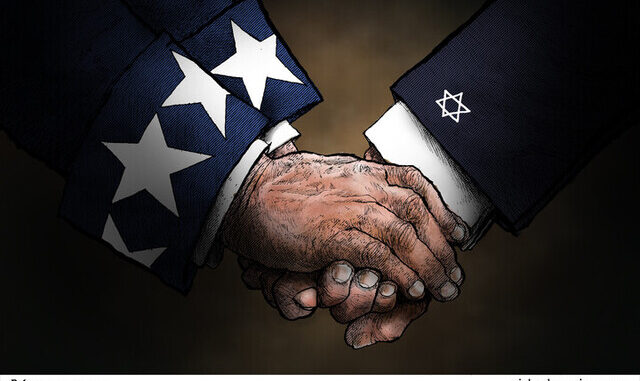
Her er en rigtig perpektivrig artikel om valget i Israel om 10 dage og lidt om USAs midtvejsvalg om godt 2 uger
Max Dublin : “What is seldom spoken of is Israel’s economic success under Bibi leadership. When Bibi first took power in 1996, Israel was still languishing economically under the decades-long leadership of the Labor Party. Her per capita GDP at the time was $17,500. Since then, it has grown fourfold to around $70,000 and is now higher than that of Japan, Germany, France, and England. “
Taget herfra
Had the Flydubai attempted hijacking succeeded, it would have made for quite an October surprise leading up to the Israeli general elections slated for October 27. Since that failed attempt, we have learned through interrogations that the co-pilot’s goal was to crash the plane into a terminal of Ben Gurion airport, in which case not only the passengers and crew on the plane, but also potentially thousands of other people would have been killed. In other words, the hijacking was planned as a 9/11 copycat terrorist attack.
After 9/11, America was briefly united in outrage, but politics being politics, it was not long before the finger-pointing began. Since October 7, many pundits have observed that, given its small population, for Israel, October 7 was the equivalent of about a dozen 9/11s, and for a while it too united the state. However, even in Israel, that unity soon began to fall apart. And that division is very much at the fore going into the upcoming election.
The main leader of the opposition is Gadi Eisenkot, founder of the Yashar party. As a retired general and former chief of staff of the IDF, he has a great résumé. He also lost a son early in the war, and, not surprisingly, that fact has a great deal of cachet in Israeli society. Moreover, Eisenkot is descended not from the old-guard Ashkenazi establishment that arrived from Europe in the early days of the Zionist movement, but from Mizrachi parents from Morocco. That matters because at this point in history, the majority of Israelis claim eastern descent. He has been in politics only since 2022, when he won a seat in parliament as a member of Benny Ganz’s National Unity Party and, after October 7, was briefly a non-voting observer in Netanyahu’s emergency war cabinet. Therefore, though he leans left in a country that has increasingly been leaning right during the course of this war and doesn’t have a fraction of Netanyahu’s experience and skills, he is a strong opponent.
The ugliness in this election comes not from Eisenkot’s faction but from the recently formed and rather small Democrat Party. It was formed by a merger of two failing leftist parties, the old Labor Party, which ruled Israel for decades after its founding, and the far-left anti-Zionist Meretz party. They merged because they had both fallen so low in popularity that they would have been disqualified in Israel’s electoral system, which has a threshold to run. Its leader is Yair Golan, a former deputy chief of staff of the IDF who has made such inflammatory comments as “the IDF kills babies as a hobby” and has maintained that it was a big mistake to kill Iran’s supreme leader, Ayatollah Ali Khamenei, because his son Mojtaba and those who have risen in power are even more radical than he was.
Most of the opposition’s campaign is based on blaming Netanyahu for the October 7 Hamas invasion despite the now well known intelligence failures. For example, for months before the invasion, the female soldiers who staffed the listening posts near the Gaza border sent warnings about preparations for an invasion to their superiors in army intelligence but were told to shut up or they might be court-martialed. Many of these young women were later murdered by invading terrorists who assaulted these listening posts at the beginning of the pogrom.
While the Israeli opposition focus on Bibi’s failures, they try to minimize the incredible successes of this war. Though they are trying to regroup and rebuild, both of Iran’s proxies, Hamas and Hezb’allah, have been pulverized during this war and, despite their defiance, objectively speaking, are both shadows of their former selves. Most significantly, Israel has proven that Iran herself is no longer out of reach and that the IAF can reach and dominate Iranian airspace at will, while the Houthis are also within the purview of the Jewish State.
What is seldom spoken of is Israel’s economic success under Bibi leadership. When Bibi first took power in 1996, Israel was still languishing economically under the decades-long leadership of the Labor Party. Her per capita GDP at the time was $17,500. Since then, it has grown fourfold to around $70,000 and is now higher than that of Japan, Germany, France, and England. One imagines that the Bibi hating latte-sippers in Tel Aviv could not afford their luxurious lifestyle without the benefit of such a strong economy.
Polling in Israel is even more corrupt than in America, because the polling organizations will not allow one to examine tabs on their websites. Predictably, the leftist pollsters show the leftists winning, whereas Channel 14, the sole right-wing pollster, shows Likud winning. Most likely, there will be a stalemate, as there was in the four elections during the two years that preceded Likud’s present coalition majority. In that case, President Herzog will be asking leaders to cobble together a majority coalition, and in the meantime, Netanyahu will remain prime minister for up to 58 days.
Gregg Roman of the Middle East Forum has noted that that 58-day interval coincides with the interval between the American midterm elections and the seating of winners in the newly elected Congress on January 2, 2027. Should the Democrats win the House or the Senate, they will theoretically have to wait until that date do anything effective to thwart Trump’s war efforts in the Middle East. General Amir Avivi of the Israel Defense and Security Forum (IDSF) has maintained that more kinetic action by the coalition will be necessary to win the war with Iran and her proxies. Not surprisingly, both Trump and Netanyahu have signaled that they do not want to resume kinetic action against Iran again before their respective elections. And it is highly unlikely that Iran, though thirsting for revenge, will attack Israel any time soon because, as Avivi has also pointed out, there are only two things that the Iranian leadership fears: Israel and her own people. So, logically, if the coalition is going to resume fighting with Iran, that will likely happen during the 58-day interregnum.
The big question hanging in the air for both Israel and America is how much the achievements of both Bibi and Trump might be set back if the left once again seizes power after the respective upcoming elections. One can speculate, but unfortunately, the answer to that question is imponderable.
According to the Department of Justice, 49 Americans were killed along with Israelis on October 7, 2023, and numerous others have also been murdered or maimed along with hostages taken since the Islamic Revolution in Iran in 1979. Neither America nor Israel chose this war, but both are the only powers capable of winning it — not only for the sake of the safety of their own people, but for the sake of saving Western civilization. It is time to silence the voices that for half a century have been shouting, “Death to America!” and “Death to Israel!”

Taget herfra
Leave a Reply