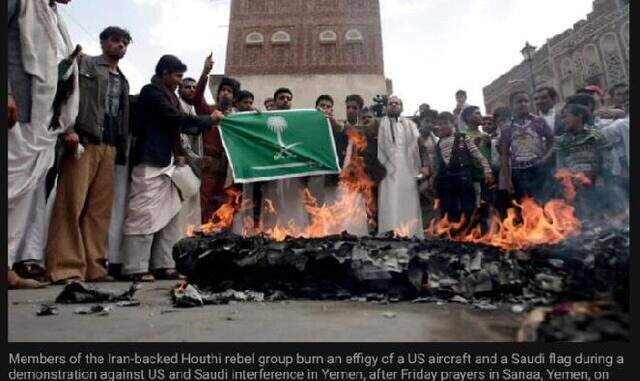
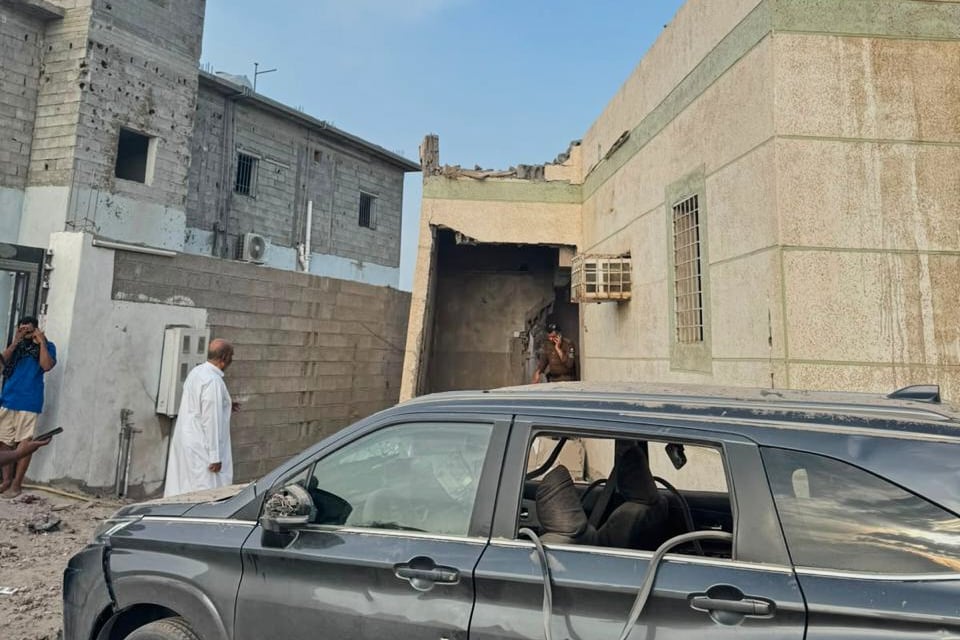
Men vil IKKE normalisere forholdet til Israel …
Her er to artikler om det :
Saudis reportedly won’t budge on Israel normalization, as they seek help against Houthis
Taget herfra
Saudi Arabia is running low on missile interceptors and has turned to regional and Western allies for assistance as its standoff with Houthi rebels in Yemen drags on, two regional officials said Wednesday.
The officials said the Saudis have asked France, Britain, Pakistan and Egypt to deploy air-defense support to the region to help defend against missiles and drones fired by Houthis and other Iran-backed groups.
The outreach was initiated because Saudi Arabia’s main ally and arms supplier, the United States, has seen its own stock of interceptors dwindle over the course of a six-month war with Iran, one official said. Both officials spoke on condition of anonymity because they were not authorized to brief the media.
Saudi officials did not immediately respond to a request seeking comment, though a Saudi source quoted by Israel’s Kan public broadcaster said that even if Jerusalem were to provide assistance against the Houthis, Riyadh will not agree to normalize ties without a resolution of the Palestinian issue. The report didn’t clarify if Saudi Arabia has asked Israel for help.
Saudi Arabia has repeatedly stressed that it will not agree to normalization without an “irreversible pathway” to Palestinian statehood, which Prime Minister Benjamin Netanyahu’s government adamantly opposes.
“The assumption that… Riyadh will be flexible on the matter of normalization with Jerusalem is mistaken,” the Saudi source told Kan.
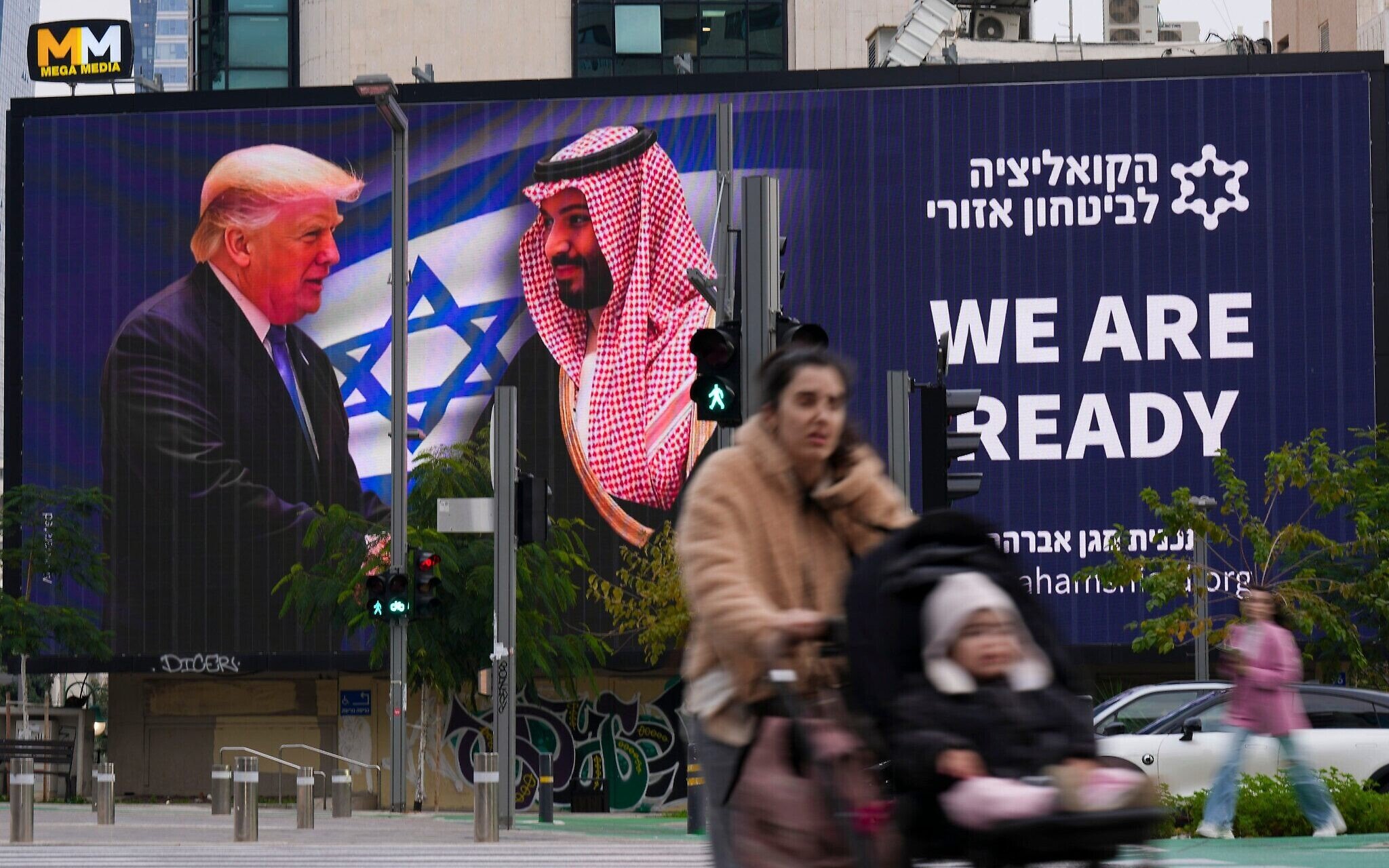
The fighting between Saudi Arabia and the Houthis is the latest front to erupt as a result of the Iran war. On Wednesday, Saudi Arabia accused the Houthis of trying to attack Islam’s holiest city with a drone; the region responded with condemnation but no sign of military support.
The kingdom declared Mecca, the birthplace of the Prophet Muhammad, a “red line” and said it had intercepted the drone. The Houthis denied targeting Mecca, about 1,100 kilometers (680 miles) from Yemen’s border.
Saudi Arabia struggles to rally support
With the world’s biggest oil exporter under fire from rebels backed by the Saudis’ regional adversary, the kingdom needs a safe outlet for its crude as well as military assistance. There’s no clear path to either.
A crucial Saudi pipeline has been shut down, reportedly for weeks, after an attack by Iranian-backed militias in Iraq. The Houthis have been targeting infrastructure in the kingdom and its shipping on the Red Sea, where they have seized several islands in the Bab el-Mandeb Strait. And Iran is still targeting ships in the Strait of Hormuz. Oil prices remain above $100 a barrel.
One of the regional officials said Saudi Arabia is in a “very difficult position,” since it has to protect not only its military bases and vital government installations, but also oil facilities across the kingdom.
The second official said Saudi Arabia is also seeking to rally its international allies to launch a collective response against the Houthis. “But the decision now is to give diplomacy a chance,” the official said, adding that Oman and Egypt are leading efforts for de-escalation in Yemen.
“This is just not a Houthis versus Saudi Arabia issue,” said Adam Baron, a fellow at New America, a Washington-based think tank. “This is a matter of figuring out some way to guarantee wider patterns and pathways of international shipping.”
Last weekend, Oman hosted a meeting between US and Houthi representatives to discuss the regional tensions, said two people familiar with the matter, including a Houthi official. They gave no further details and spoke on condition of anonymity because they weren’t authorized to brief the media.
Allies offer diplomatic support but no signs of military assistance
On Tuesday, the British prime minister’s spokesman, Tom Wells, confirmed the UK has a “close defense partnership” with Saudi Arabia. But he declined to say whether Saudi Arabia has asked for military assistance, or say whether British troops are in the country.
US and NATO officials have previously acknowledged a critical shortage of missile interceptors in Europe, raising questions about Europe’s ability to assist.
A Turkish government official said Turkey was engaged in talks with Iran and the United Arab Emirates to try and lower tensions. The official, who spoke on condition of anonymity because he was not authorized to speak on the issue publicly, did not provide further details.
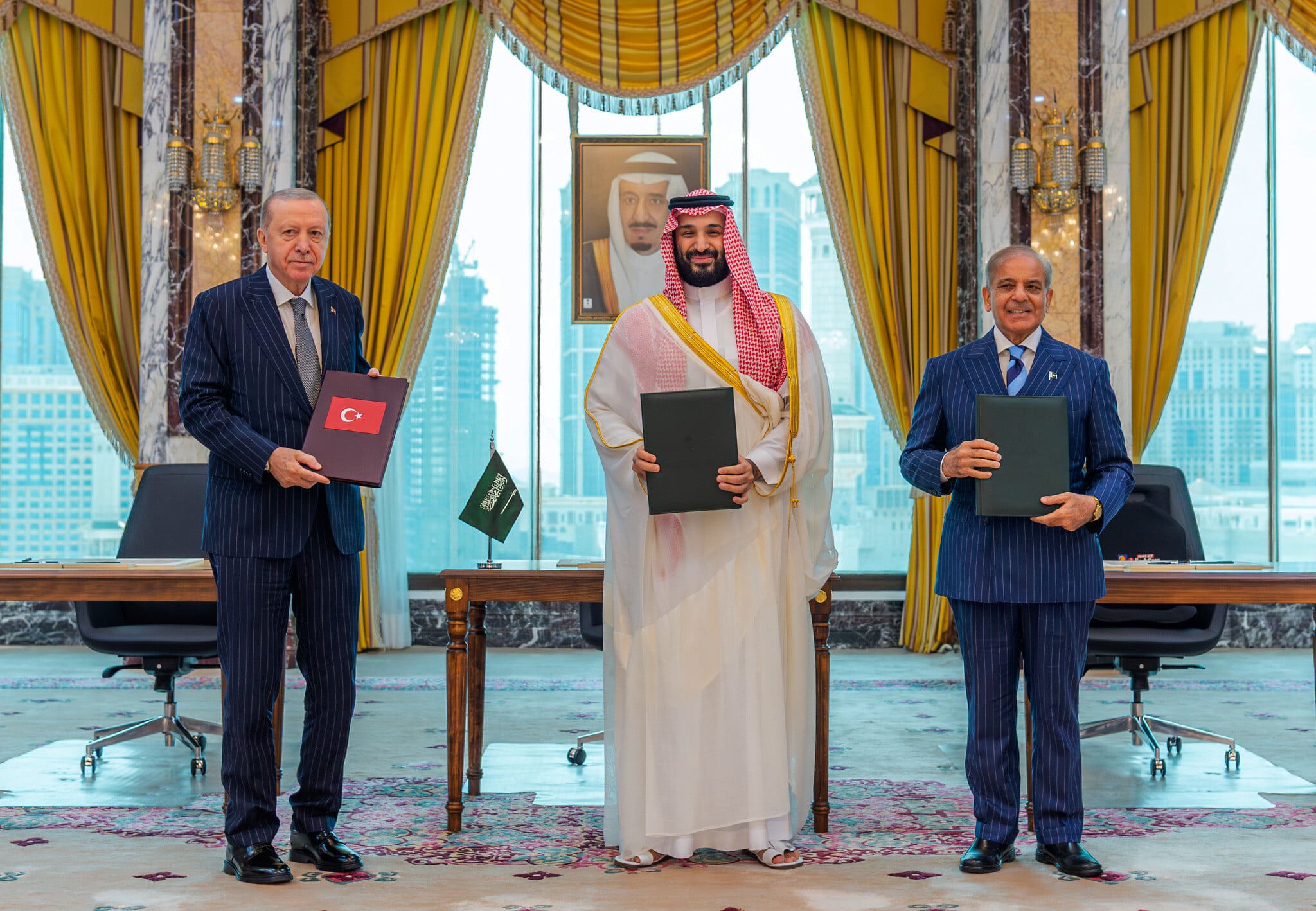
The attacks are the first test of a new defense pact among Saudi Arabia, NATO member Turkey and nuclear power Pakistan. But officials from Turkey and Pakistan told the Associated Press they have not received a Saudi request for support in response to the Houthis’ escalation. The officials spoke on condition of anonymity because they were not authorized to speak publicly on the issue.
Amid the condemnation of the attempted attack on Mecca, Pakistani Prime Minister Shehbaz Sharif said his country and the Saudis stand “unwaveringly, shoulder to shoulder.” Turkey’s foreign minister expressed solidarity and said no country can “remain indifferent,” state-run Anadolu Agency reported.
For now, the US is staying out of the fight
The United States has sold billions of dollars in weapons to Saudi Arabia and has committed to other support, but top US officials have indicated a lack of desire to get involved in the conflict.
US Vice President JD Vance on Monday said Washington had been in “constant contact” with the Saudis and had “engaged in direct conversations with the Houthis.”
When asked whether Saudi Arabia had requested intervention, a US official said the US military’s Central Command has a task force in place for “enhancing intelligence sharing and planning support with Saudi forces.”
The US military hosted senior military leaders from eight countries last week at a conference in Germany to discuss “opportunities for enhancing security cooperation in the Middle East,” the official also said, speaking on condition of anonymity because they were not authorized to comment publicly. The official did not confirm which countries attended.
Houthis claim to shoot down a F-15 fighter jet
The Houthis claimed Wednesday that they shot down a F-15 fighter jet operated by the Saudi-backed coalition over Yemen’s central province of Marib, though they didn’t say when it happened.
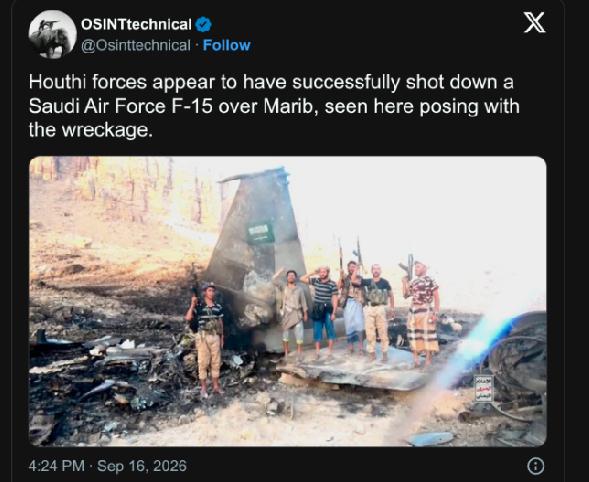
In a video released by the rebel group’s media channels, Houthi fighters appear to be pushing what they are calling the wreckage of a F-15 emblazoned with a Saudi flag. AP could not independently verify the claim.
Spokespeople for the Saudi-led coalition and the Saudi government didn’t immediately respond to a request for comment.
On Wednesday evening, Houthi military spokesman Yahya Saree said “Saudi warplanes launched 40 airstrikes… targeting the provinces of Taiz, Marib, and Hodeidah over the past 24 hours.”
He had previously put the number of Saudi strikes launched over the past week at more than 450, saying that in response, the group had targeted a Saudi air base and a state oil company facility in the Red Sea port city of Yanbu.
Top Iranian diplomat visits China
Iran’s top diplomat was in China, the biggest buyer of his country’s oil.
Chinese Foreign Minister Wang Yi called on the US and Iran to exercise restraint and reopen the Strait of Hormuz as soon as possible. He expressed China’s concern about the spread of the fighting to Yemen and the Red Sea, according to China’s Foreign Ministry.
Iran’s Foreign Minister Abbas Araghchi said that Tehran seeks “the restoration of calm to the region and friendly and peaceful relations with our neighbors.”
China has avoided direct involvement in the war, but President Xi Jinping at the BRICS summit in New Delhi over the weekend again offered Beijing’s help in ending it.
Oil flows through the Strait of Hormuz have recovered somewhat as tankers risk using a route near Oman on the other side of the waterway, with guidance from US forces. Estimates vary because ships can turn off location systems but range from 5 million to 7 million barrels per day on average.
That’s less than half the amount before the war began with US and Israeli strikes on Iran on Feb. 28.
Taget herfra
og
Houthis met US officials in Oman, promised not to hit American, Israeli ships — sources
“Meeting reportedly took place despite Washington designating Iran-backed group a ‘foreign terrorist organization’; Houthi delegation said to include sanctioned senior official”
Taget herfra
US officials met representatives of Yemen’s Houthis in Oman over the weekend, five sources familiar with the matter said Wednesday, days after the Iran-backed militia seized a strategic stretch of the Red Sea coast in a sweeping offensive that routed Saudi-backed forces.
News of the meeting came as renewed fighting between a Saudi-led coalition and the Iran-backed Houthis continued, along with condemnations of an alleged Houthi strike targeting the Muslim holy city of Mecca.
The meeting, which had not previously been made public, was held at the US Embassy in Muscat, three of the sources said on the condition of anonymity. Two sources said that Oman’s government, a longtime regional mediator, helped organize the meeting.
In the meeting, which one source said took place on Sunday, the Iran-backed Houthis told US officials that they had no intention of attacking American vessels and that they were committed to a 2025 ceasefire with the US, two sources said.
One of the sources, a Yemeni, said the militia group also said they would not attack Israeli ships or any commercial vessels, except those belonging to Saudi Arabia.
Following the October 7, 2023 Hamas massacre and subsequent war in Gaza, the Houthis — whose slogan calls for “Death to America, Death to Israel, [and] a Curse on the Jews” — routinely attacked Israeli-linked ships and fired multiple missiles and drones at Israel.
In response, Israel attacked the Houthis in Yemen, located some 1,800 kilometers (1,100 miles) away, 19 times with the Israeli Air Force and Israeli Navy. The attacks largely ended with the Israel-Hamas ceasefire last year.
According to two of the sources, the US side was represented by embassy personnel.
The Trump administration designated the Houthis a “foreign terrorist organization” in March 2025, criminalizing support for the group as it embarked on a two-month bombing campaign against it to halt a campaign of attacks on Red Sea shipping. But Washington has negotiated with them since, reaching a ceasefire that May.
US President Donald Trump had said on Saturday that the Houthis had phoned his administration asking the United States to keep out of the Yemen war. US Vice President JD Vance said on Monday the United States was in direct contact with the group, without giving details.
One of those sources said the Houthi delegation included a senior official based in Muscat who is under US sanctions, Mohammad Abdulsalam. Another source confirmed Abdulsalam’s presence along with that of another senior Houthi official, Abdelmalik al-Ajiri.
Asked whether the US had met with the Houthis in Oman, a State Department spokesperson did not confirm the meeting, but said safeguarding freedom of navigation in the Red Sea and preventing the export of terrorism from the Middle East were core US interests.
Oman’s embassy in the US and Abdulsalam did not respond to a request for comment.
The Houthis last week seized effective control of Yemen’s entire Red Sea coastline, including the historic port of Mokha, and Perim Island in the Bab el-Mandeb Strait at the sea’s mouth, a key bottleneck for the global oil supply.
Saudi Arabia’s de facto ruler Crown Prince Mohammed bin Salman called Trump last week seeking US military support amid the dramatic Houthi advances. Reuters has reported that Washington told Riyadh it would not get directly involved.
The Houthis, who seized Yemen’s capital in 2014, have fought against a Saudi-led coalition for more than a decade. The war had quieted under a ceasefire in recent years, but fighting resumed in July when the Houthis declared a blockade on Saudi shipping in the Red Sea in response to a Saudi blockade of Yemeni ports.
Houthis claim to down Saudi F-15
Despite the reported meeting between Houthi and US officials, the Iran-backed group has continued to launch attacks against Saudi Arabia.
On Wednesday, the Houthis said they targeted an Aramco facility in the Red Sea port city of Yanbu, in Saudi Arabia, as well as an airbase in southern Saudi Arabia in response to Saudi airstrikes.
Military spokesman Yahya Saree said Riyadh had launched more than 450 airstrikes this week, and that in response, the Iran-backed group “targeted the Aramco facility in Yanbu with dozens of ballistic missiles and drones” causing fires, as well as “the Khamis Mushait air base.”
Earlier, Saree said the Houthis had also shot down a Saudi F-15 fighter jet. No immediate evidence was presented of that incident.
The latest attack followed accusations from the Saudi-led coalition battling the Houthis that the group had, on Tuesday, targeted Mecca, Islam’s holiest city, sparking outrage across the Muslim world.
A spokesperson for the military coalition said Saudi Arabia’s air defenses had destroyed a Houthi drone south of Mecca before it could enter prohibited airspace over the holy city.
The Houthis denied firing a drone at the city, but Riyadh nevertheless condemned the “cowardly terrorist attack.”
The Gulf kingdom “reaffirms its legitimate right to take all necessary measures to defend the security of the two holy mosques, the pilgrims, and the entire Saudi territory, its citizens, and its residents,” the foreign ministry said in a statement.
Arab League Secretary General Nabil Fahmy likewise condemned the alleged Mecca attack, warning that “compromising the security of Mecca and the sanctity of Islamic holy sites is a matter of extreme gravity.”
Qatar also condemned the attack.
Taget herfra
Interessant at houtierne kun vil angribe Saudiarabien . Det er givetvis efter ordre fra Teheran, som ikke ønsker at hverken USA eller IDF skal involveres
Saudibarbarerne er jo vant til at kunne betale sig fra alt, men nu må selv ordne houtierne !
De får den “sædvanlige” hjælpe fra deres nye alliancepartnere Tyrkiet og PAKista – dvs fine ord og intet konkret.
De har jo en hær, flåde og luftvåben – så hvorfor angriber de ikke houtierne ?
Er de bange for at tabe … ?
Pestileserne fik i 1921 76% af Palestine, og valgte at opkalde sig selv og landet efter floden Jordan.
Så hvad er problemet?
Benjamin Fulfords Geopolitiske Rapport fra den 14. September 2026
https://prepareforchange.net/2026/09/17/benjamin-fulford-report-enough-is-enough-it-is-time-to-arrest-the-criminals-starting-with-the-fake-trump-september-14-2026/
De saudiske sandlopper skulle have et meget effektivt luftvåben, men flyene står bare og ruster! KOM I GANG!
‘Frederiksen’, dit link lugter langt væk af AI-genereret indhold.